Why “human-like vision” is harder than it sounds
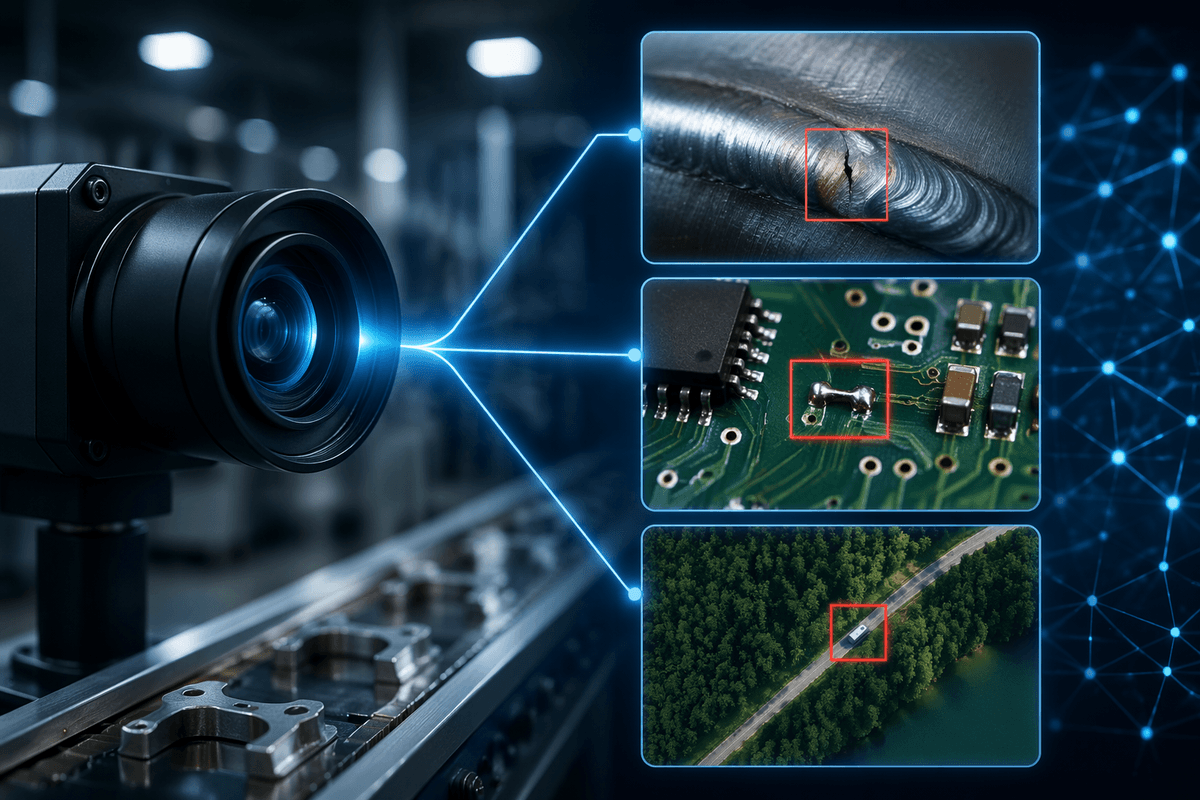
A vision model can hit 98% on a test set and still miss what a person sees instantly: a half-covered barcode, a glare on a conveyor, a shopper’s hand blocking the product, a forklift viewed from an odd angle. Humans don’t just “detect objects.” They use context (where things usually are), physics (what can support what), and goals (what they’re trying to do) to fill in gaps.
“Human-like” is hard because the world is open-ended and messy, while most training data is narrow and tidy. Closing that gap usually means more diverse data, tighter sensor/lighting control, or extra compute for larger models and temporal reasoning—each with real cost and operational friction.
Choose the human skills you actually need to copy
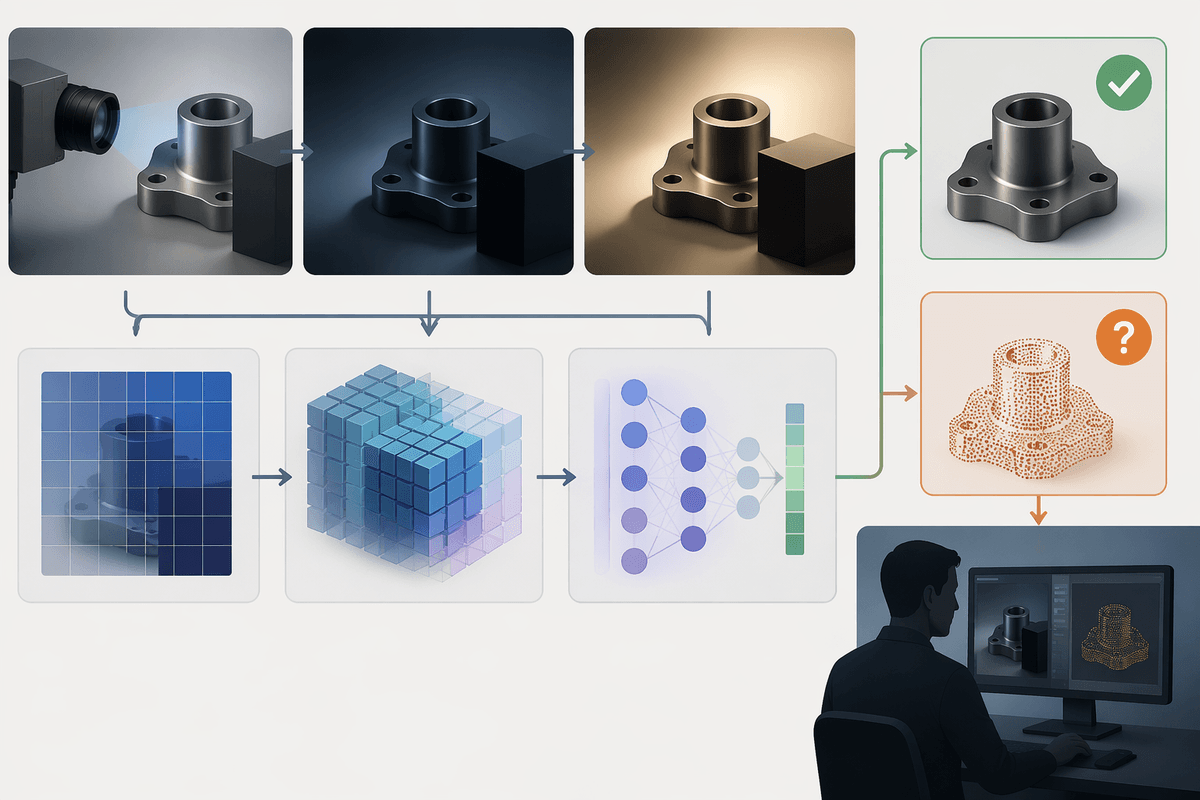
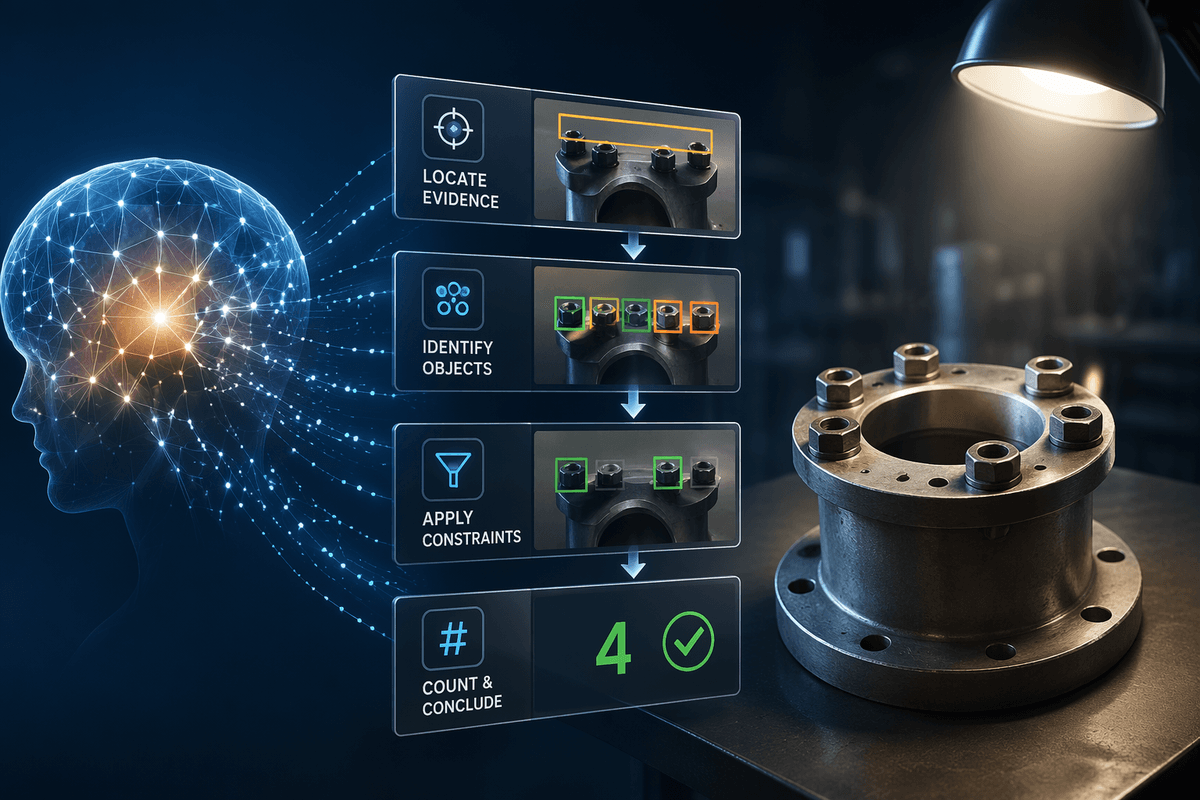
In practice, “human-like” is not a single target—it’s a shortlist of behaviors your system must reliably show in your setting. A retail shelf scanner may need robust reading under occlusion and glare, plus calibrated “not sure” outputs when the view is bad. A robot in a warehouse needs viewpoint tolerance, near-field depth reasoning, and an ability to notice when something is out of place (a pallet skewed, a person entering a lane). A consumer camera feature might need stable tracking and identity consistency across frames more than perfect single-frame classification.
Write these skills as measurable requirements: recovery after partial occlusion, performance under lighting shifts, latency bounds, and when to defer to a human or another sensor. Each added “human” capability has a bill—more data collection, more sensors, more annotation time, more compute, and more edge-case testing—so copy only what changes outcomes.
Data that teaches meaning, not just labels
Most teams start with labeled boxes and classes, then wonder why the model “knows the label” but not the situation. If your data only teaches “this is a pallet” or “this is a person,” the model has little incentive to learn that pallets are usually on the floor, that hands cause temporary occlusion, or that glare creates unreliable pixels. Data that transfers to messy reality includes variation (lighting, viewpoints, motion blur), but also signals about what stays consistent: sequences, multiple cameras, depth, and weak supervision like “these two frames show the same item” or “this region was handled, then moved.”
In practice, you get more meaning from cheaper, broader capture plus selective labeling than from perfectly annotated narrow datasets. Collecting video, syncing sensors, and curating “near-miss” failures costs time, storage, and privacy/legal review. Plan for an ongoing pipeline where production mistakes become new training examples, not one-off postmortems.
Move beyond detection into scenes, relationships, and causality
Teams often discover the gap when detections look “correct,” yet the system still makes a bad decision: the right boxes, wrong story. A pick-and-place robot sees “box” and “hand,” but misses that the hand is reaching into the box; a safety camera detects “person,” but not that they’re stepping into a restricted lane; a shelf scanner detects “item,” but not that it’s behind the wrong price tag. Humans infer relationships (in front of, inside, supporting, moving toward) and basic constraints (objects don’t teleport; two solid items can’t occupy the same space) that turn pixels into a scene.
Practically, this pushes you toward models and representations that track entities and their interactions: multi-object tracking with identity, pose and keypoints, depth/geometry, and relation heads or graph-style reasoning over detected entities. Causal language is useful when it’s testable: “the label is unreadable because glare saturates the region,” or “the pallet is unstable because the load overhangs.” You’ll need sequences, consistent IDs, and harder ground truth (relations and events), plus more compute and latency budget to maintain state and run reasoning beyond a single frame.
Use time, memory, and attention like humans do
In a real environment, most “human-like” wins come from not treating each frame as a fresh start. People implicitly smooth over noise, remember what they saw a second ago, and shift focus to what matters right now. If your scanner briefly loses the barcode to a passing hand, a temporal model should carry forward a stable hypothesis and only revise it when the evidence stays inconsistent. If a warehouse robot sees a pallet edge in three consecutive frames, it can commit to a pose estimate with higher confidence than any single blurred frame supports.
This usually means adding state: tracking IDs over time, short-term memory features, and attention that prioritizes changed regions or task-relevant cues (hands near a bin, feet near a safety line). The practical constraint is latency and compute—maintaining memory, running trackers, and buffering video can blow edge budgets and complicate debugging when “the model” is really a chain of interacting parts.
Ground vision with language and other senses—carefully
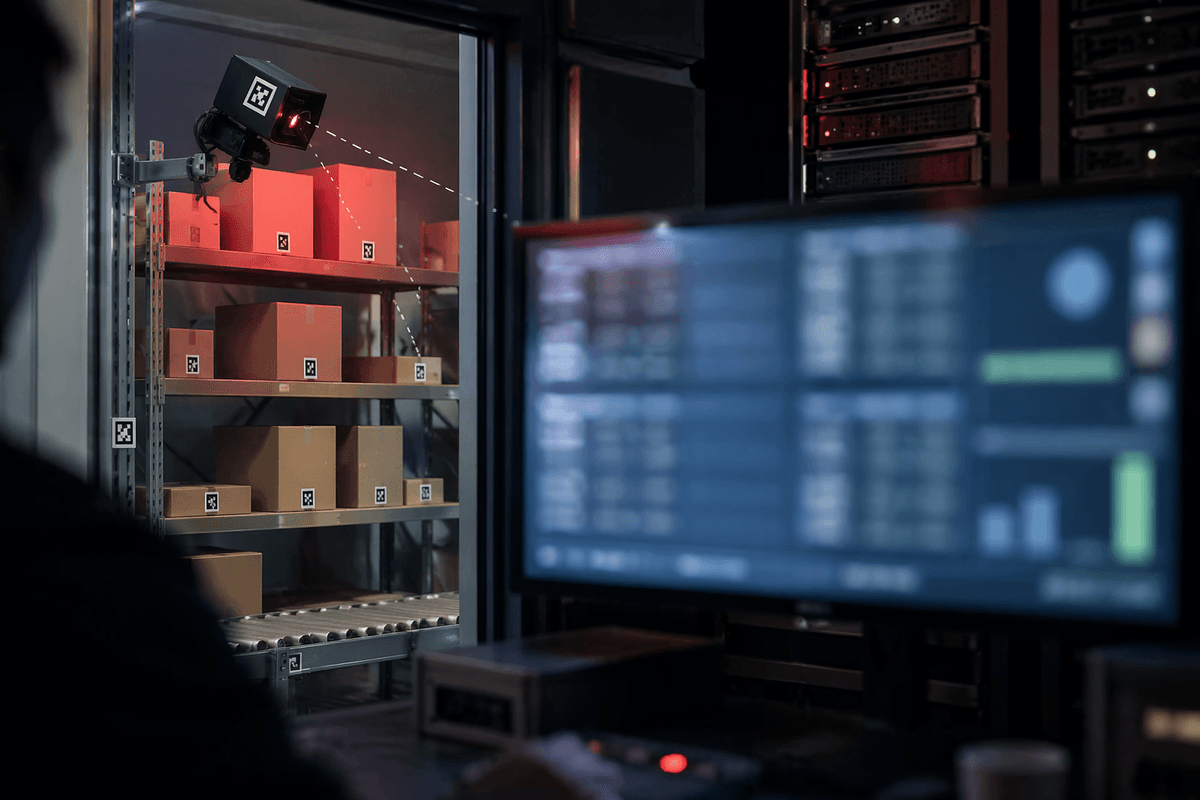
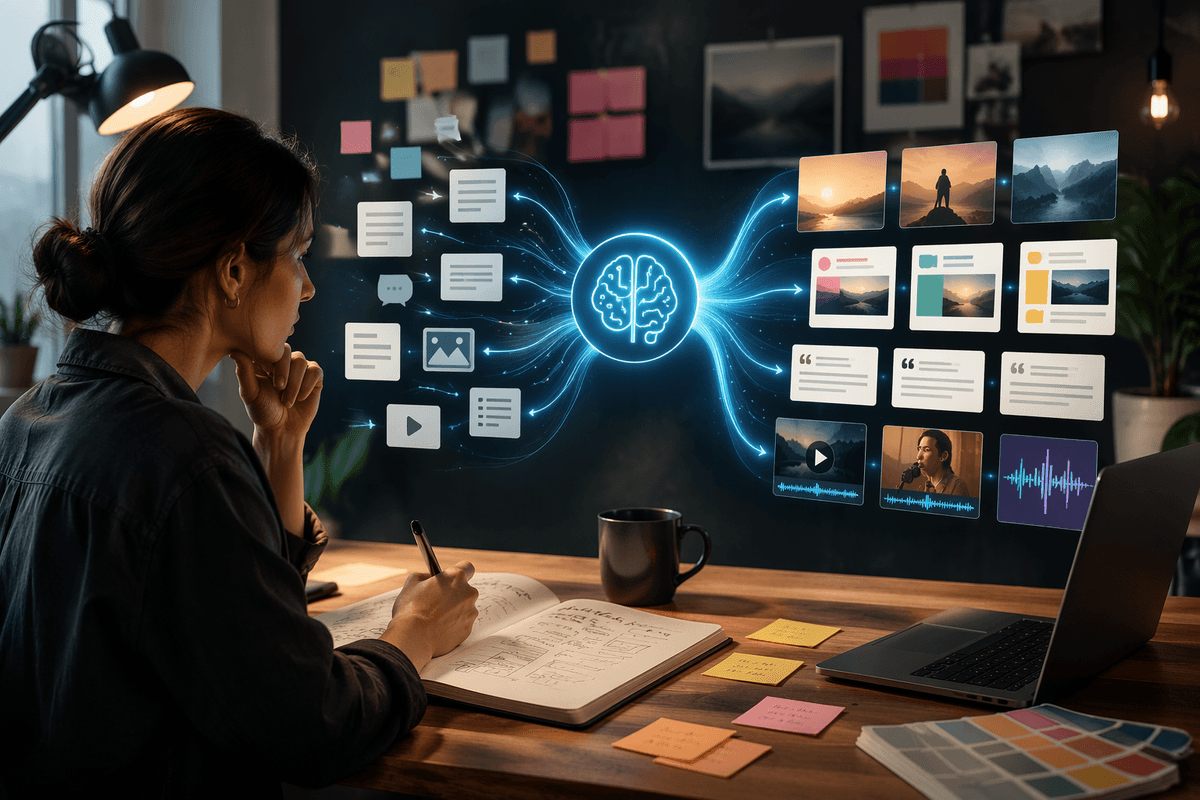
A common real-world pattern is that the pixels are ambiguous, but the task isn’t. The barcode region is blown out, yet the work order says only three SKUs are possible; the robot can’t see the bin’s lip, but depth or force feedback says it made contact. Language can anchor vision by turning “what might this be?” into “which of these candidates fits this context?”, and by converting procedures into constraints (allowed parts, expected sequence, forbidden zones). Other sensors can do the same, but only if you treat them as evidence, not truth.
The failure mode is subtle: multimodal models will happily learn shortcuts from text, logs, or audio that don’t hold up at deployment. If the model “reads” the inventory system instead of the shelf, you get silent errors when the system is wrong. Budget for sensor sync, calibration drift, and missing channels, and design ablations that prove vision still carries weight when the language side lies.
Design for uncertainty, surprises, and graceful failure
In production, the painful failures aren’t the ones you predicted and covered with training data; they’re the ones where the camera is dirty, the scene is novel, or a “rare” viewpoint becomes common after a workflow change. Treat uncertainty as a first-class output: calibrate confidence, add reject options (“can’t read,” “need another view”), and design policies for what happens next—ask for a rescan, slow the robot, switch to depth, or hand off to a person. Put explicit detectors around known breakpoints like glare, occlusion, motion blur, and out-of-distribution inputs, and log them as events.
Graceful failure costs real product work. You’ll spend time building UI/UX for deferrals, adding retry loops, and setting latency budgets for “one more frame” or “one more angle.” The mistakes become bounded: the system fails loudly, recovers more often, and gives you cleaner data on what to fix instead of mysterious, one-off incidents.
Measure “human-like” with the right tests and feedback loops
Teams get misled when evaluation is a single accuracy number on a static split. “Human-like” shows up in curves and breakpoints: performance vs. occlusion level, glare intensity, motion blur, viewpoint shift, and time-since-last-good-frame; calibration (how often 0.8 confidence is actually right); and the cost of deferrals and retries in end-to-end throughput.
Build a test suite that mirrors operations: scenario slices, stress tests, and replay of real failure logs, plus “change detection” checks after camera moves, firmware updates, or packaging redesigns. Close the loop by routing every human override, rescan, near-miss, and safety stop into labeling and retraining queues, with clear owners and weekly regression gates. The constraint is discipline: logging, privacy review, and dataset/version control take sustained engineering time.