Why AI hardware feels rigid when models keep changing
You can change a model in a week, but you can’t change the box it runs on. A team picks a GPU platform, then spends months wiring up drivers, kernels, quantization choices, monitoring, and deployment patterns around that specific performance and memory profile. When the workload shifts—from training to inference, from dense to sparse, from long-context to multimodal—the “best” chip can change fast, but the installed base doesn’t.
That’s why AI hardware feels rigid: upgrades arrive in big, expensive steps. Power budgets, rack space, cooling, and network topology were sized for the last generation, and swapping fleets is a capital and operations event. Even if a new accelerator is faster, it may be unavailable, require new software work, or force compromises elsewhere in the system.
What “Lego-like chips” actually means: chiplets, not magic
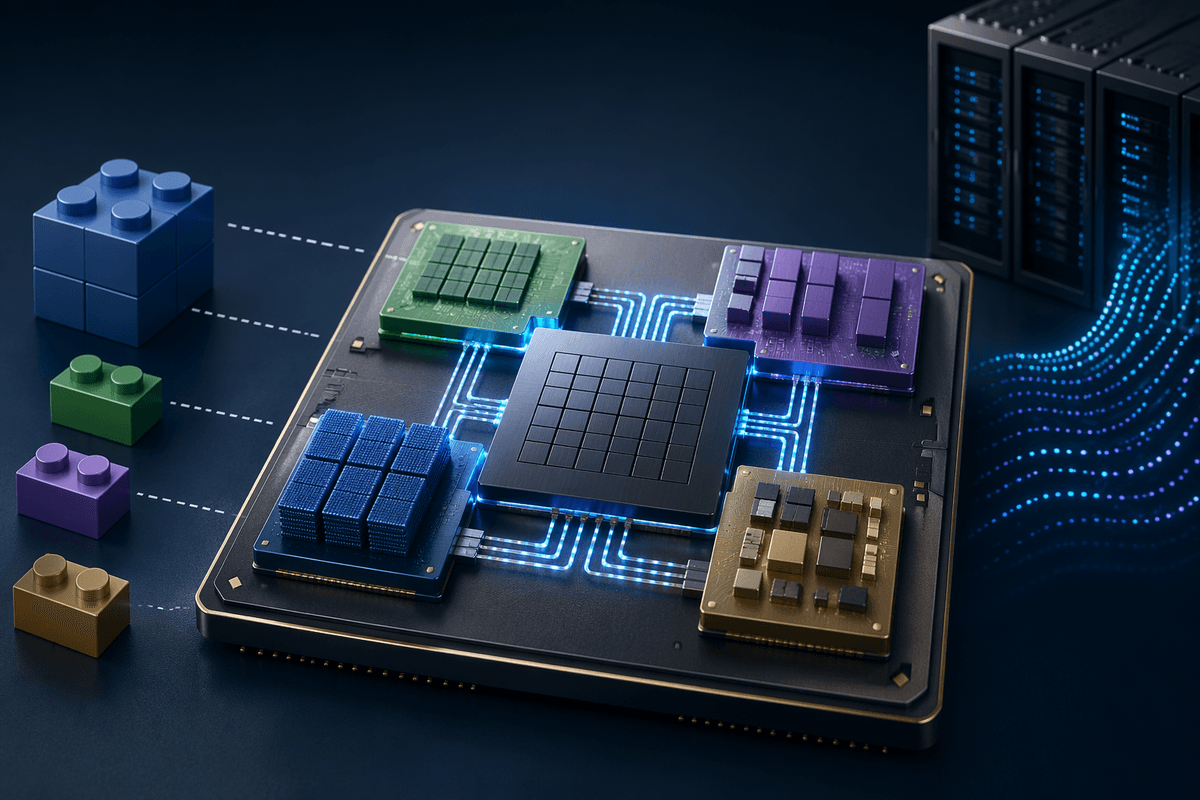
The “Lego-like” pitch usually doesn’t mean you can snap together any random AI blocks and get a new chip next month. It means a vendor builds a package from smaller dies—chiplets—each focused on a job like compute, I/O, cache, or memory controllers, then links them inside one physical module.
That approach is showing up now because leading-edge silicon is expensive and hard to manufacture at large sizes. Smaller chiplets can improve yield, let companies mix process nodes (fast logic on an advanced node, analog and I/O on a cheaper one), and reuse proven pieces across multiple products. In practice, it’s a way to ship more variants without redesigning everything.
The “snaps” are engineered, not universal. Packaging, test, and the on-package interconnect become major design work, and that adds time, cost, and new failure modes—even when the building blocks are reusable.
Where modularity helps most: scaling compute, memory, and bandwidth
A familiar pain point is hitting a ceiling you can’t code around: not enough compute for throughput, not enough memory to fit the model, or not enough bandwidth to keep the math units busy. Chiplets help most when a vendor can scale those three knobs more independently. Add more compute tiles for higher TOPS/FLOPS, swap in a different memory setup (HBM stack count, controllers, cache slices), or widen the on-package fabric so data moves faster between tiles.
This matters because modern AI performance is often set by “can you feed it,” not “can you multiply.” Long-context inference and large-batch training are especially sensitive to memory capacity and bandwidth. A modular design can offer a family of parts that share the same software surface but land at different price and power points by changing the mix of tiles.
More tiles and more HBM can raise cost sharply and make cooling and board design harder, even if each chiplet is easier to build.
The tradeoffs you notice later: latency, power, and complexity
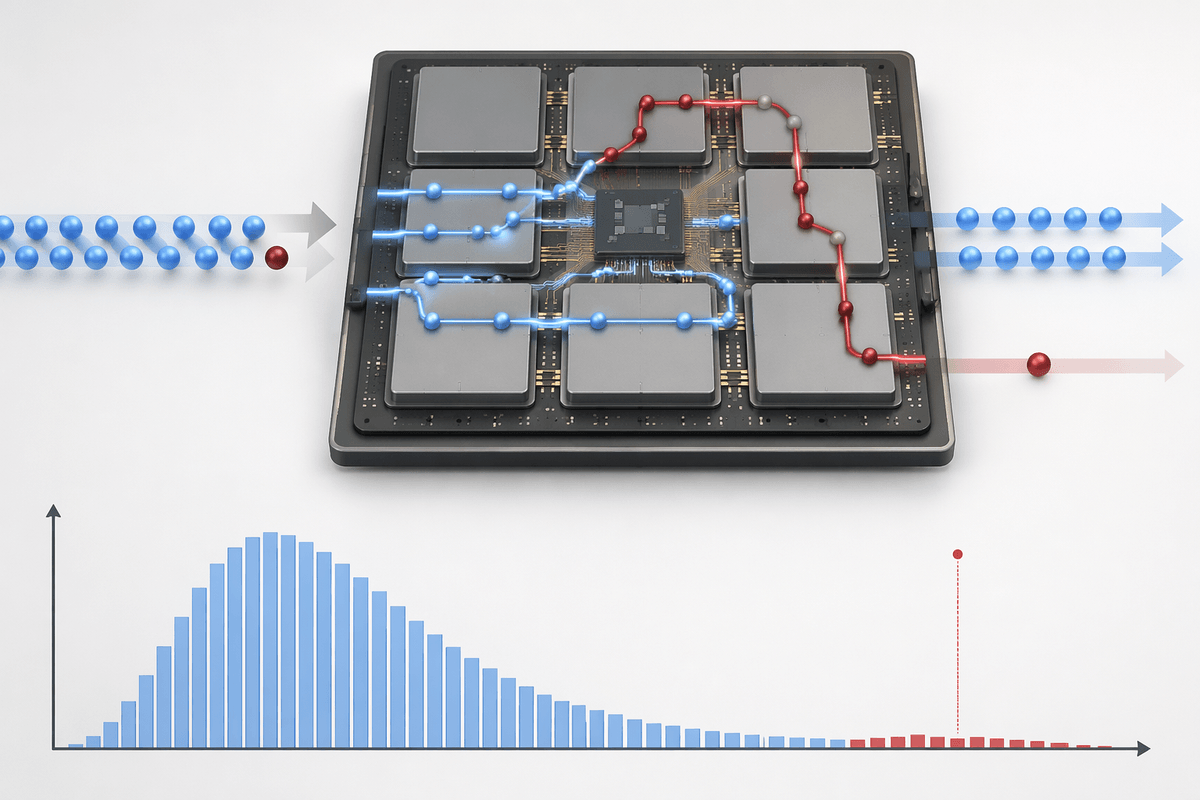
You notice the tradeoffs when everything looks “fine” on paper, but the system feels less predictable under load. Moving data across chiplets is still slower and more energy-hungry than staying on one monolithic die. That extra hop can show up as higher tail latency for inference, or as more synchronization overhead during training, especially when work doesn’t split cleanly across tiles.
Power is the second surprise. The on-package fabric, additional PHYs, and packaging overhead all consume watts, and those watts land in a tighter thermal envelope. A design that scales bandwidth by adding links can improve peak throughput yet worsen performance-per-watt if utilization is uneven. It can also raise cooling requirements even when the “compute” chiplets haven’t changed.
Complexity is the slow burn: more dies mean more test steps, more failure modes, and more tuning around placement, routing, and clocking. Those costs don’t always show up in the chip headline specs, but they do show up in schedules, yields, and how quickly a vendor can ship the next variant.
Interconnects are the real product: UCIe, NVLink, and friends
In a chiplet world, the differentiator isn’t just the compute tile; it’s the plumbing between tiles and between packages. If you can’t move activations and weights quickly and predictably, extra TOPS on a spec sheet turn into stalled units and expensive memory waiting. That’s why vendors increasingly sell an interconnect story as much as a silicon story: how many links, what bandwidth, what latency, and how well it behaves when many engines contend at once.
UCIe matters because it aims to standardize die-to-die links inside a package, making it easier to mix chiplets without a bespoke interface every time. Proprietary fabrics still matter because they often come with tighter co-design: NVLink-style approaches can tie together multiple GPUs as a single high-bandwidth pool with mature software expectations. The practical reality is lock-in shifts upward: even if chiplets are “modular,” your upgrade flexibility is constrained by which interconnect ecosystem your servers, cables, and software stack were built around.
How modular chips change the buying decision for AI teams
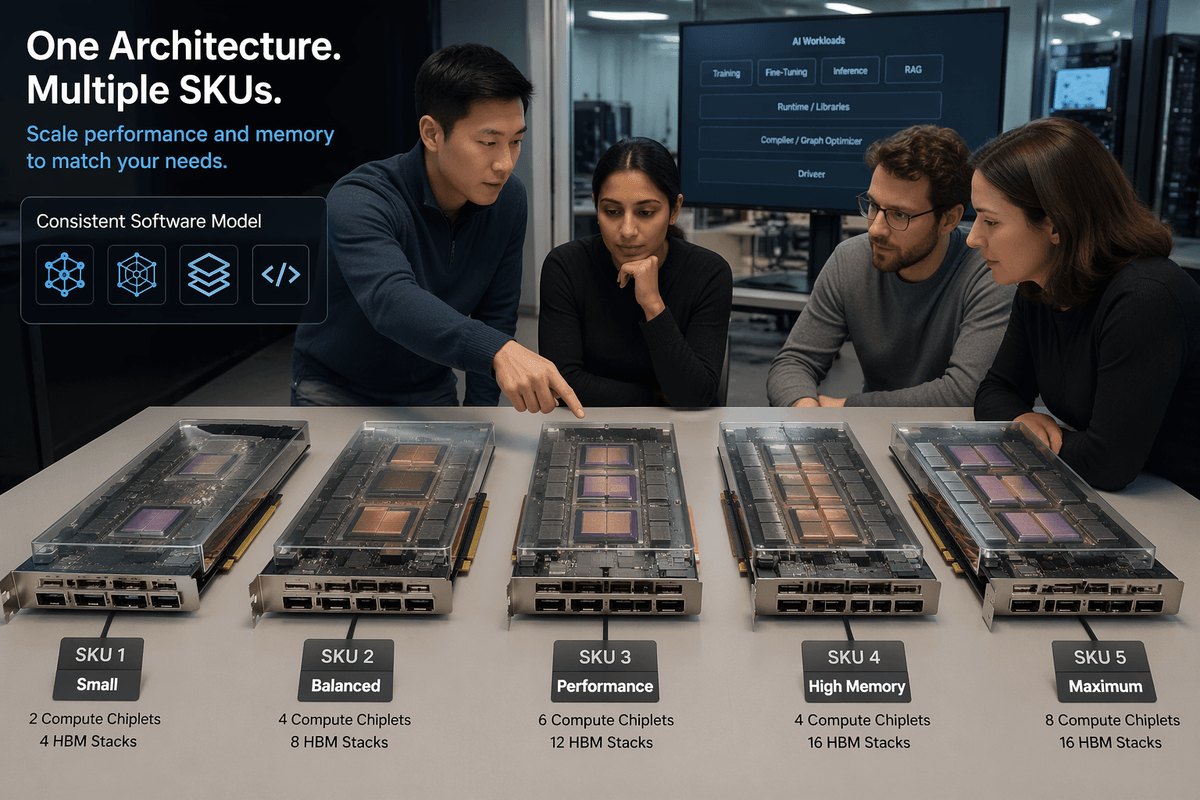
A typical buying process starts with a simple question: do you need more GPUs, or do you need a different balance of memory and bandwidth? Chiplet-based roadmaps make that question less binary. Instead of waiting for a full new architecture to fix a bottleneck, vendors can offer variants that keep the same programming model but change the ratio of compute tiles to HBM stacks, or the on-package fabric width. For AI teams, that shifts evaluation toward “family fit”: can you scale across SKUs without rewriting kernels, changing precision strategies, or revalidating everything in production?
It also changes what “upgrade” means operationally. If a platform keeps the same board form factor, power envelope, and interconnect topology, you can refresh capacity with fewer data center changes, which is often the real cost driver. The modularity mostly helps within an ecosystem. You still need to qualify a server vendor, firmware, drivers, and networking, and chiplet variants can arrive unevenly due to packaging capacity, HBM supply, and binning complexity.
What to watch in the next 12–24 months
You’ll see the biggest movement in packaging and connectivity capacity, not headline “cores.” Watch whether chiplet variants actually ship on predictable cadences, or slip because advanced packaging lines and HBM supply stay tight. Pay attention to UCIe adoption in real products: are there meaningful mix-and-match chiplet demos beyond single-vendor stacks, and do they come with workable validation and RMA processes? On the system side, track whether multi-accelerator fabrics get easier to operate—stable performance isolation, debuggable congestion, and consistent scaling—because that’s what turns modular silicon into practical fleet upgrades.