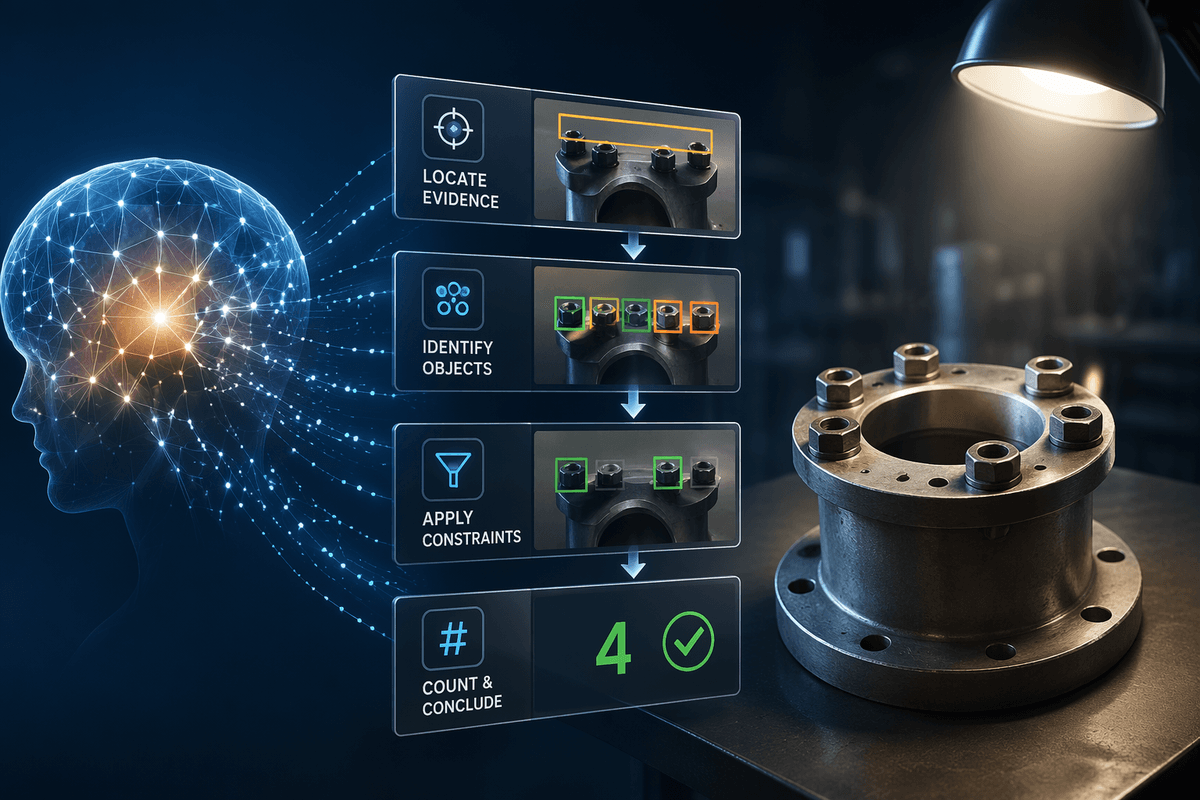
Why training costs keep rising even as models improve
You can train a noticeably better model than last year and still spend more money getting there. The biggest driver is iteration: teams run more experiments, sweep more hyperparameters, and rerun training to validate changes in data, safety, and serving behavior. At the same time, “better” often means “bigger context” and “more tokens,” which directly increases compute even if the architecture is more efficient per step.
Infrastructure costs creep in from the sides. Faster clusters raise the hourly bill, checkpointing and evaluation add overhead, and data pipelines (filtering, deduping, labeling) become a first-class expense. Even when training is optimized, the practical constraint is that deadlines push you toward parallel runs, and parallelism is rarely free.
What “self-growing” actually means in modern AI models
A familiar pattern is starting with a “small” model to prove the data and objective, then later paying to train the “real” model from scratch. Self-growing tries to avoid that reset. You begin with a smaller network and, during training, progressively expand capacity—adding layers (depth), widening layers (width), increasing the number of experts in a mixture-of-experts setup, or extending context/token budgets—while reusing the learned weights as a warm start rather than discarding them.
In plain terms, it’s like upgrading an engine while the car is still being tuned, instead of rebuilding the whole car for every upgrade. The goal is to spend more of the early training steps on cheaper compute and reserve the expensive configuration for later, when the model is already learning useful structure.
The catch is operational: you introduce growth schedules, compatibility constraints between old and new shapes, and new failure modes where a bad expansion step can destabilize training and waste the savings.
Where the savings come from—and what gets more expensive

The savings come from doing more of the “figuring it out” phase on a cheaper model. Early training is often about learning basic patterns, stabilizing optimization, and discovering whether the data mix and objective are even pointed in the right direction. If you can spend those steps at lower parameter count, shorter context, or fewer active experts, you reduce FLOPs and memory pressure, which also lowers the odds you’ll need the largest, most expensive cluster from day one.
What gets more expensive is everything around the growth events. Each expansion can require shape-mapping logic, new optimizer state, and extra checkpoints. You’ll typically run more evaluation gates to confirm quality didn’t dip, and those evals cost real time and GPU hours. There’s also a practical tax in engineering time: schedules, rollback plans, and debugging “it diverged right after the grow” failures can erase compute savings if the pipeline isn’t already disciplined.
Common self-growing patterns: depth, width, experts, and tokens
A common “grow depth” pattern starts with fewer transformer blocks, then inserts new layers later. Done well, the earlier layers already encode useful features, and the new layers mainly learn refinements. The practical difficulty is initialization and mapping: you may need to copy or interpolate existing layers, and you must carry optimizer state forward in a way that doesn’t spike loss or destabilize training.
Mixture-of-experts growth adds experts or increases the fraction of tokens routed to experts later in training. The savings are real when early training uses fewer active experts, but routing can become a new source of brittleness: load balancing, expert collapse, and sudden distribution shifts at an expansion step can hurt quality if not carefully gated.
Token/context growth is the simplest to explain: train on shorter sequences, then lengthen context. It usually reduces early compute, but it can expose long-range failure modes late, when fixes are most expensive.
Decision checklist: when self-growing is a good bet
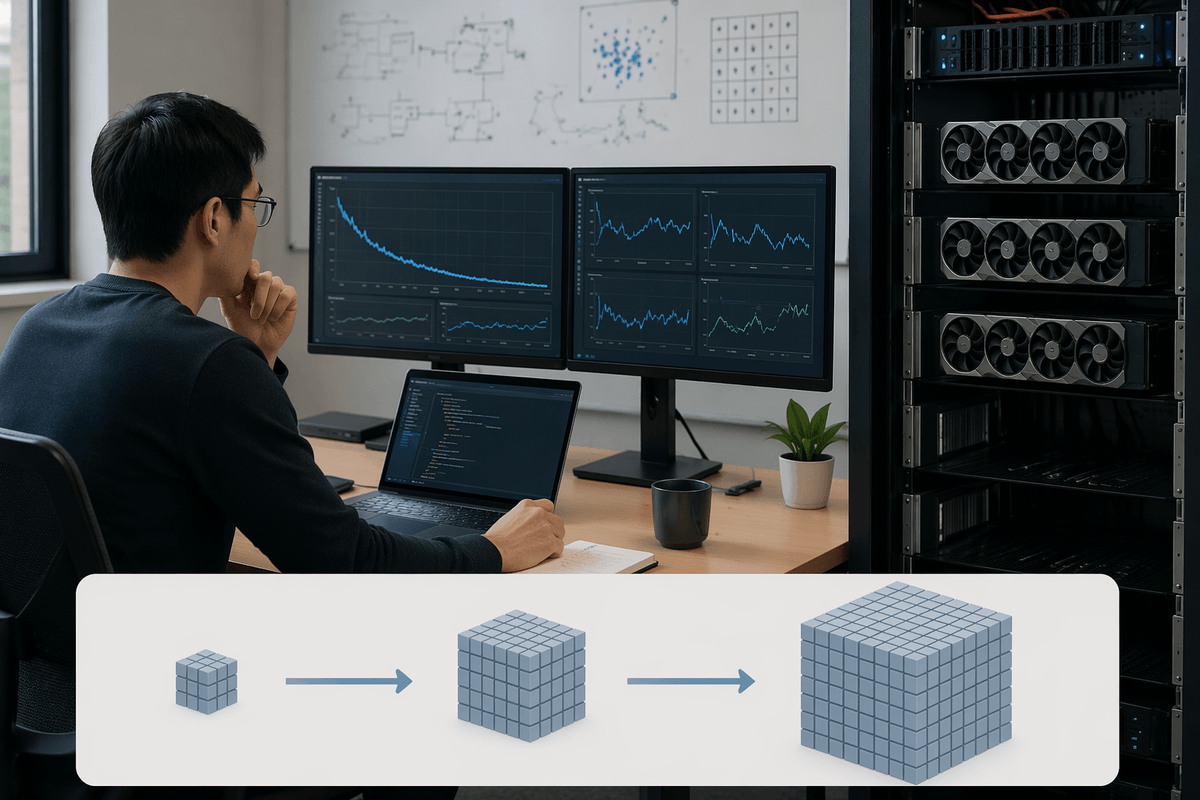
You’re usually in “good bet” territory when early training signals are informative but not inherently tied to the final scale. If your losses, evals, and qualitative samples stabilize quickly on a smaller setup, and improvements track data quality and objective tweaks more than sheer size, you can postpone the expensive configuration with less risk. It also fits when hardware is the bottleneck: starting smaller can let you use a cheaper cluster, reduce communication overhead, and avoid committing scarce high-memory GPUs until you’re confident the run is healthy.
Be cautious when the hard problems only appear at full scale: long-context retrieval, tool use across many steps, rare-domain accuracy, or tight safety constraints that require heavy evaluation throughout. Self-growing is also a poor fit if your pipeline can’t tolerate extra complexity—shape-changing checkpoints, optimizer-state migration, and rollback logic. The savings disappear fast if each growth event triggers days of debugging or forces repeated full-suite evals to regain confidence.
Implementation realities: schedules, checkpoints, and evaluation gates
A realistic self-growing run looks less like a single training job and more like a sequence of “phases” with planned expansion points. Teams pick growth triggers that are easy to observe: a loss plateau, a fixed token budget, or a minimum number of stable steps without spikes. Token/context growth often happens on a calendar (every N tokens) because it’s predictable, while depth/width/expert growth tends to be gated on stability because the expansion itself can change optimization dynamics. The practical constraint is that each phase needs enough time to settle; overly frequent grows create churn and can wipe out the intended compute savings.
Checkpointing becomes the operational center. You need at least one pre-grow checkpoint, one immediate post-grow checkpoint (to confirm the conversion worked), and a “known good” rollback point if the run diverges. Shape changes also mean you can’t assume older checkpoints will load cleanly into newer code; teams end up maintaining conversion scripts, versioned configs, and optimizer-state migration logic. This is real engineering overhead, and it tends to show up late at night when a long run fails right after an expansion.
Evaluation gates have to be explicit, because “it’s training” is not a plan. A typical gate is: quick regression evals right after the grow (to catch catastrophic drops), then a broader suite after a stabilization window (to catch slower failures like routing imbalance in MoE or long-context degradation). The eval GPU-hours scale with model size, so you want to run lightweight checks early and reserve the expensive full-suite evals for fewer, higher-confidence transitions.
How to start small: a low-risk pilot plan
A low-risk pilot starts with the least invasive growth knob: context length or batch/sequence mix. Pick one existing training run, keep the data and objective fixed, and introduce a single growth point (for example, 4k to 8k context after a defined token budget). Lock down success metrics up front: loss stability around the grow, a small regression eval set that runs in minutes, and one “must not regress” product-facing benchmark.
Make rollback cheap. Require a pre-grow checkpoint, a post-grow smoke test, and a hard stop rule if loss spikes beyond a threshold for more than N steps. Budget engineering time explicitly for checkpoint/versioning and conversion scripts; that cost is usually the first surprise. If the pilot works, add one harder dimension (depth/experts) rather than scaling everything at once.