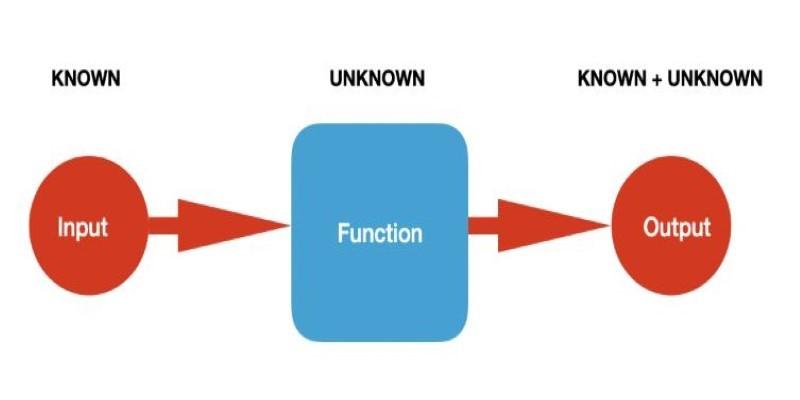
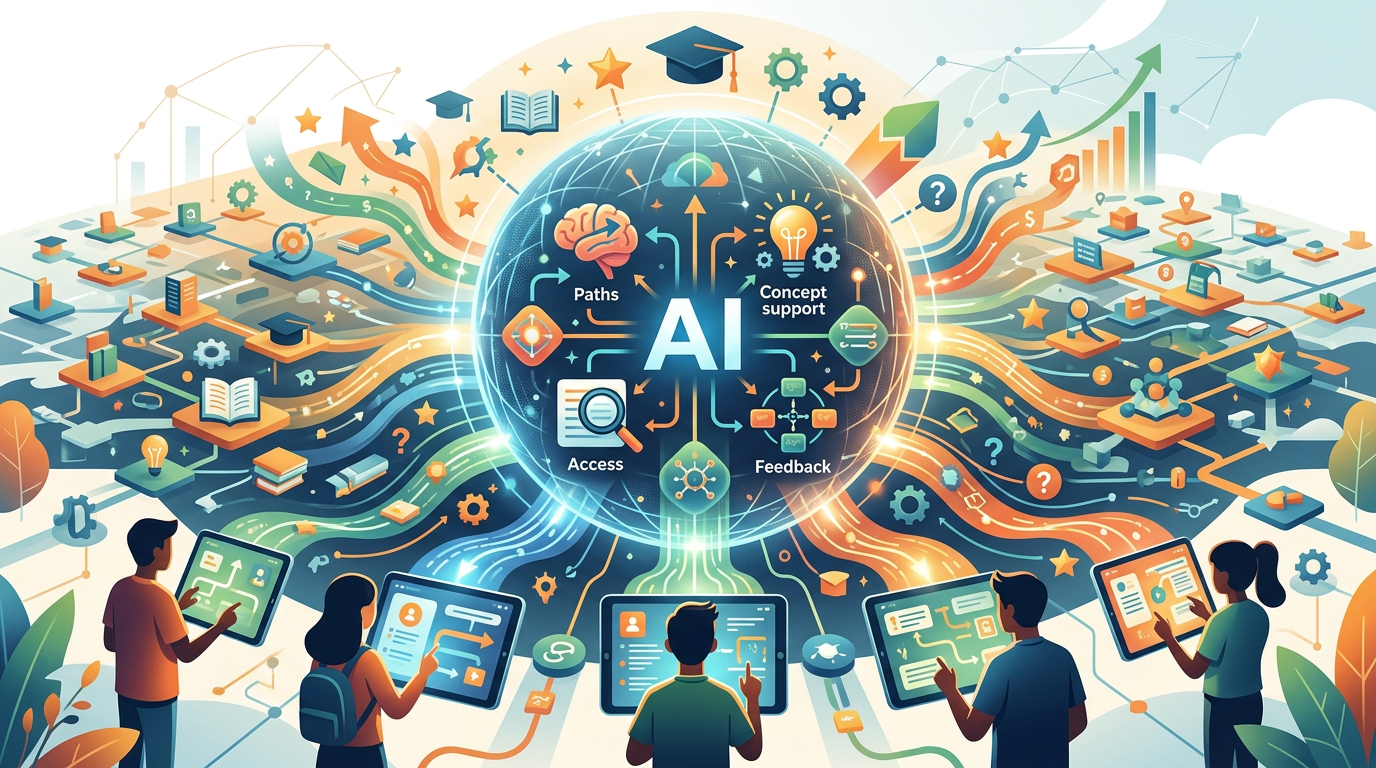
AI is transforming how we live, work, and make decisions. Modern AI can help people solve complex problems by providing them with insights that were previously difficult to obtain rapidly. Agent systems play a significant role in this change. They act as digital assistants that monitor, assess, and respond to real-life situations. These systems are getting smarter by not only following rules, but also by learning from patterns, data, and their own experiences.
Improving AI thinking means that these agents can understand the situation, predict what will happen, and give useful advice. Smarter AI agents are becoming increasingly important as they help organizations make strategic decisions, assist doctors with diagnostics, and improve daily technology. This change suggests a future in which people and smart technology work together seamlessly to achieve better, faster results.

Evolution of AI Agent Systems
AI agent systems have expanded rapidly in recent years as generative AI has gained popularity. Initially, agents could only perform simple tasks, such as reacting to user inputs or environmental changes, by following a predefined set of rules. As time passed, more sophisticated frameworks were developed, enabling agents to plan, assess, and execute complex tasks. Multi-agent systems enable agents to work together and compete with each other, which makes them more effective in changing situations.
However, older large language models (LLMs) often lacked the reasoning skills necessary to make decisions independently. Due to this limitation, researchers have developed specific reasoning models and strategies to enhance the intelligence of agents. To help agents think step by step, they were provided with tools, including Chain-of-Thought prompts, ReAct frameworks, and tool-calling. DeepSeek-R1 and OpenAI's o1 and o3 are examples of reasoning-focused models that show agents can solve complex problems step by step independently.
Train-Time vs. Test-Time Compute Scaling
To enhance AI reasoning in agent systems, computational scaling is crucial for effective decision-making. There are two types: train-time and test-time. To improve model performance, train-time scaling comprises both pre-training on large datasets and post-training, including supervised fine-tuning or reinforcement learning. Pre-training teaches the model broad patterns, whereas post-training teaches it specific abilities for the task, such as how to solve problems step-by-step and how to reason through them. Test-time scaling, on the other hand, occurs during inference, allowing the model to explore various solutions to a problem without modifying its parameters.
Agents can utilize techniques such as self-refinement, Best-of-N, Beam Search, and Diverse Verifier Tree Search to review and rank solutions repeatedly. AI models do better reasoning, make more accurate predictions, and make better decisions when they use both train-time and test-time compute scaling. This distinction is important because post-training provides foundational reasoning skills, while test-time scaling improves performance in real-world scenarios.
Training Reasoning Language Models (RLMs)
Reasoning Language Models (RLMs) undergo specific training pipelines that enhance step-by-step problem-solving and logical reasoning. Unlike regular LLMs, they "think" before they answer. RLMs create Chain-of-Thought sequences to break down complex tasks into smaller, more manageable parts. They then work on each step repeatedly, correcting any mistakes they make before providing the final answer. This method reduces the need for external prompt engineering and iterative loops, which were previously required to guide traditional models.
RLMs exhibit significant improvements in problem-solving, logical thinking, and decision-making across various areas. They need careful prompt design and specific training pipelines, which often include reinforcement learning or supervised fine-tuning. RLMs are key tools for the future generation of AI agent systems because they can handle uncertainty, consider multiple answers, and enhance their reasoning processes. This capability is made possible by the combination of post-training and test-time techniques.
Advanced Techniques for AI Reasoning
To enhance the reasoning capabilities of AI agents, we must utilize advanced computing techniques and innovative algorithms. Self-refinement enables models to continually improve their own outputs, whereas verifier-based searches examine multiple solutions to identify the best one. Best-of-N techniques generate a large number of possible responses and then rank them based on their effectiveness. Beam Search and Diverse Verifier Tree Search further enhance reasoning by examining multiple solution trees and utilizing Process Reward Models to evaluate sub-paths.
These techniques enhance inference without modifying the underlying model, making smaller models as effective as larger ones. These approaches enable AI agents to plan, adjust, and modify their plans in real-time. By combining these strategies, developers enable models to perform complex reasoning tasks independently, make decisions more quickly, and remain accurate in real-world situations. These methods serve as the building blocks for creating AI systems that are smarter, can take care of themselves, and can handle uncertainty and changing tasks.

Impact and Future of Reasoning Agents
Reasoning-focused AI agents are transforming fields such as healthcare, finance, robotics, and logistics by making smarter and more independent decisions. Through organized reasoning and iterative review, they reduce mistakes, streamline processes, and enable people to solve problems more efficiently. The switch to Reasoning Language Models demonstrates the importance of having models that can break down problems and self-correct. Future advancements will likely focus on augmenting reasoning abilities, including consideration of ethical and safety implications, as well as enhancing interpretability for human users.
As computational scaling, hybrid AI methods, and multi-agent collaboration improve, agents will be able to solve increasingly complex issues in the real world. Over time, AI agents will become more intelligent and independent, acting as important partners that connect human decision-making with machine intelligence. These agents are likely to have a greater impact, highlighting the importance of reasoning in the future generation of AI systems.
Conclusion
As AI improves, agent systems that focus on reasoning are becoming increasingly powerful and dependable. These intelligent agents support individuals across various fields, including healthcare, finance, and logistics, enabling them to make more informed decisions quickly and with greater accuracy. AI agents can predict outcomes, solve complex issues, and streamline processes by utilizing learning, adaptation, and advanced reasoning methods. People and AI agents will collaborate even more effectively, with agents serving as supportive partners rather than mere tools. Investing in AI reasoning and agent development ensures that technology enhances human abilities safely, ethically, and effectively.