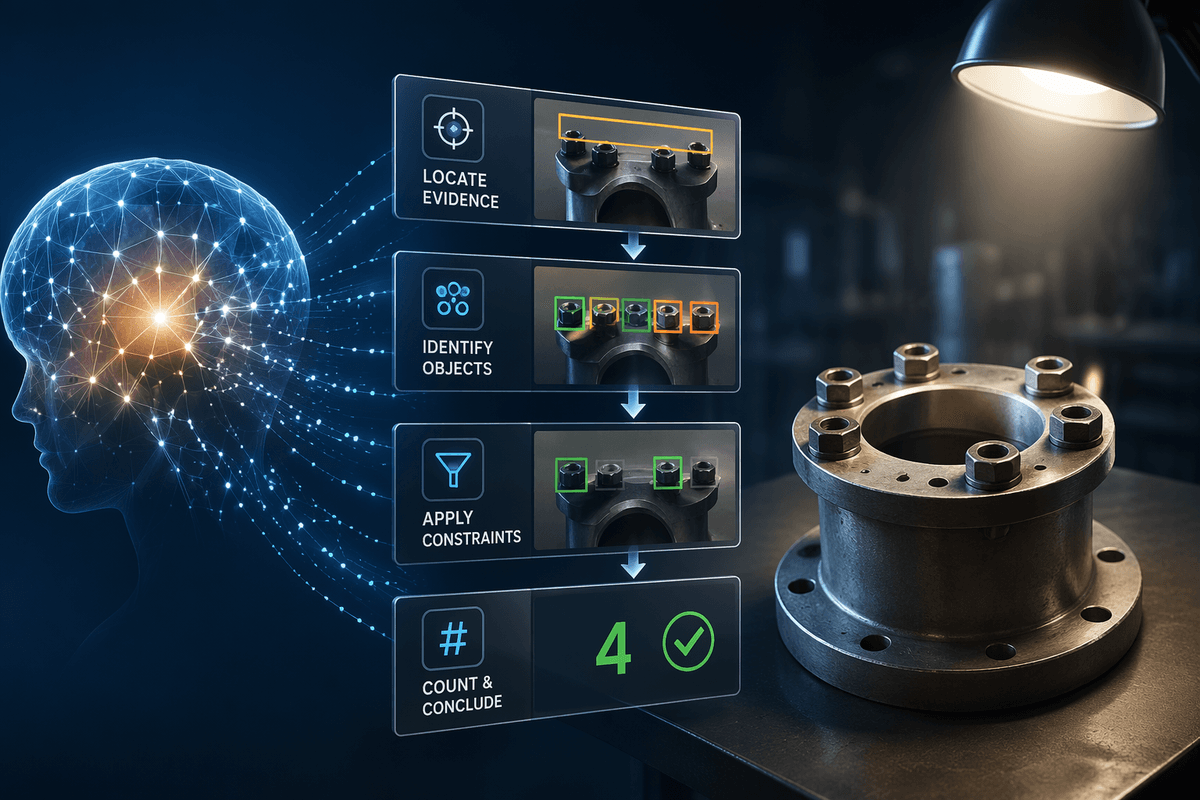
Why a single model still gets facts wrong
You’ve probably seen the pattern: ask a model for a release date, a regulation detail, or a “quick summary with sources,” and it answers smoothly—even when the detail is wrong. That happens because the model is optimized to produce the most plausible next words, not to run a built-in fact check. It can also blend nearby facts (two similar company names, two policy changes, two versions of a product) into one confident-sounding claim.
Even when it “knows” the right answer, it may not retrieve it reliably at the moment you ask. The prompt can steer it toward a coherent story over a correct one, especially when you request speed, brevity, or a single definitive answer. The model usually doesn’t pause to verify against a trusted reference unless you explicitly add tools, steps, or external data—each of which adds latency, cost, and sometimes new failure modes.
What “model collaboration” means in real systems
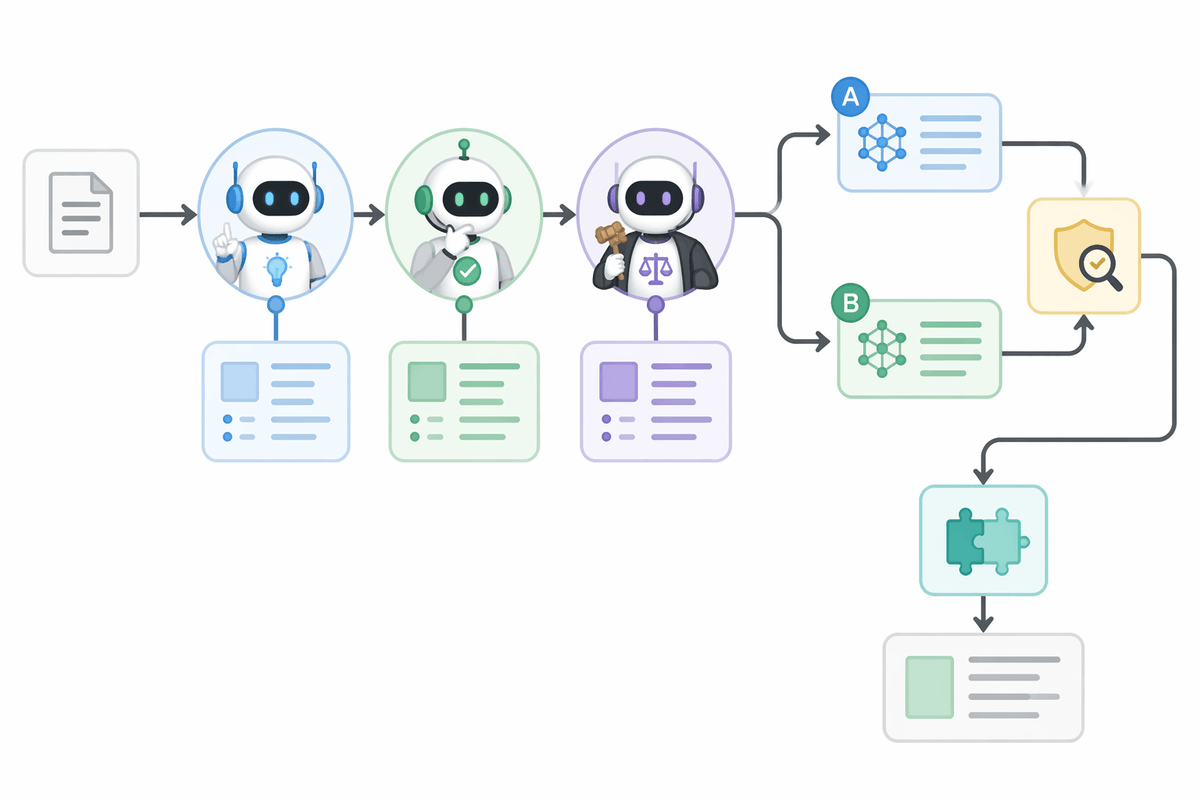
A familiar setup is one model drafting an answer and a second model asked to “red team” it. In real systems, “model collaboration” usually means splitting roles so no single pass is trusted: a proposer writes, a critic checks specific claims, and sometimes a judge reconciles differences. The simplest pattern is cross-checking: run the same question through two models and compare overlap. A more structured pattern is debate, where each model must defend claims and point to weaknesses in the other’s reasoning.
Teams also use ensemble voting (pick the majority answer) and tool-assisted verification, where one agent queries a database or search index and another validates that each key claim is supported. Collaboration helps most when errors are uncorrelated; it fails when models share the same blind spots, and it costs extra tokens, latency, and operational complexity.
Choosing the right collaborators: diversity vs consistency tradeoffs
You can feel the tradeoff when you try this yourself: two models give you near-identical wording and the same wrong “fact,” or they disagree wildly and you’re left arbitrating. Using closely related models (same vendor family, similar training style) increases consistency and makes disagreements easier to interpret, but it also raises the risk of correlated mistakes—especially on popular misconceptions, niche acronyms, and recently changed policies.
Adding diversity helps when you need coverage: different model families, different prompting styles, or a mix of a general model with a domain-tuned one can surface contradictions that a single lineage would miss. The cost is practical: more latency, higher inference spend, and more messy outputs that require a clear adjudication rule. A good default is one “fast, cheap” drafter paired with one “slower, skeptical” checker, and only adding a third voice when the claim is high-impact or time-sensitive.
Collaboration patterns that actually catch factual errors
A common failure mode is letting a “critic” give a vague thumbs-up. The patterns that catch errors force the system to surface a checklist of verifiable claims and then attack them one by one. A practical variant is claim extraction: the drafter outputs an answer plus 5–10 atomic claims (“X launched on date Y,” “law Z applies to companies over N employees”). The checker is only allowed to respond in a table: claim, confidence, what would falsify it, and whether evidence was provided.
Another effective pattern is targeted cross-checking: two independent drafts are generated, then a third agent only reviews the deltas, not the whole answer. This cuts cost and focuses attention where disagreement already exists. Ensemble voting works for stable trivia, but it’s weaker for niche or fast-changing facts where models share the same misconception. Tool-assisted verification is usually the highest yield: one agent retrieves sources, a second maps each claim to a specific snippet, and a judge blocks any claim that can’t be grounded. The constraint is speed and spend; even “lightweight” pipelines can double or triple latency.
Grounding with evidence: retrieval, citations, and claim checking
You’ve likely noticed how “with sources” can still mean “with links that don’t prove the sentence.” Grounding fixes that by separating recall from verification: one step retrieves evidence from a controlled set (your docs, a vetted knowledge base, or carefully scoped web search), and a different step writes only what the evidence supports. This sounds simple, but it forces a discipline most single-pass answers skip: every important claim must be traceable to something you can inspect.
In practice, treat citations as pointers to specific snippets, not a bibliography. A useful pattern is claim checking: extract atomic claims, retrieve top matches per claim, then require the checker to label each as supported, contradicted, or not found. Anything “not found” gets rewritten or removed. The tradeoff is cost and latency, plus new failure modes—retrieval can miss the right document, and models can still misquote or overgeneralize from a passage—so your pipeline needs a clear “no evidence, no claim” rule.
Who decides the truth when models disagree?

You’ve seen the awkward moment: the drafter says the regulation changed in 2025, the checker insists it was 2024, and both sound confident. At that point, “truth” can’t be a vibe—it needs an explicit decision rule. A useful default is evidence-first: any claim with direct, scoped support wins over an unsupported claim, even if it’s the minority view. If both sides cite something, prefer the more authoritative source (primary text, official documentation) and the more specific match (the snippet that actually states the date, threshold, or definition).
When evidence is missing or ambiguous, don’t force a single answer. Have the judge return (1) what’s agreed, (2) the precise point of disagreement, and (3) a recommended action: retrieve another source, broaden the search, or escalate to a human reviewer. The practical cost is extra latency and occasional “no answer,” but that’s cheaper than shipping a confident mistake.
Measuring reliability without fooling yourself
You can run a beautiful multi-agent workflow and still fool yourself if you only track “did it sound right.” Treat reliability like a product metric: define a test set of real questions your team asks, freeze it, and score outputs against a known answer key or primary sources. Measure claim-level accuracy (supported/contradicted/not found), not just answer-level “correct,” because a single wrong date can break the whole result.
Watch for two traps: correlated errors and selective evaluation. If collaborators share training data and style, agreement can be meaningless; track “agreement with evidence,” not agreement with each other. And don’t only test easy, stable facts—include time-sensitive, niche, and adversarial prompts. The practical constraint is cost: building an answer key, running retrieval, and doing human spot-checks adds time and money, but it’s the only way to know whether your pipeline is improving reality, not confidence.
A useful operating rule is to publish a confidence label that reflects your process, not your gut: “fully grounded,” “partially grounded,” or “ungrounded—needs review.” Then set escalation thresholds (high-impact topics, low evidence coverage, or model disagreement) so humans spend time where it changes outcomes.
Putting it together: a lightweight architecture you can start with
Picture a workflow where you still get fast answers, but the “shipping” version is evidence-gated. Start with a drafter that must output (a) the response and (b) 5–10 atomic claims. Send only the claims to a verifier that retrieves snippets from your approved sources (internal docs first, then a scoped web/search tool if allowed) and labels each claim supported/contradicted/not found.
A judge then rewrites the final answer using only supported claims, attaching “fully grounded / partially grounded / needs review.” Keep escalation simple: route to a human when any high-impact claim is “not found,” sources conflict, or retrieval coverage drops below a threshold. The tradeoff is real: even this “lightweight” setup adds latency and tool spend.